In this article
Cracks on the walls and buildings are common. Virtually, all houses or buildings crack at one time or another. Such cracks may be on walls, ceiling, floors or even on the structural portion of a building.
Certain cracks are so minute and do not impact on the wall appearance. Other cracks are severe and they can be threatening to the safety and stability of the building. This is why it should be known what produces cracks and which ones should be paid attention.
Expert Tip
Always consult a structural engineering consultant for evaluation of cracks in buildings and walls.
Why Do Cracks occur in Walls and Buildings?
Cracks in walls do not come out of the sky. They tend to be an indication of that something has been shifted or moved in the building or the ground beneath it.
- Ground or Soil Settlement
Buildings rest on soil. The soil beneath a building could either creep or settle out of place.
- The various sections of soil in the soil may sink at varying rates.
- Wall pressure and foundation pressure are caused by this unbalanced movement.
- The cracks could be on walls, floors, or even columns.
One of the most common causes of building structure cracks is soil settlement.
2. Temperature Changes
Every material that is used in building contracts on cooling down and expands in heating.
- The walls stretch over the course of the summer and narrow during the winter.
- Stress is as a result of repeated expansion and contraction.
- This stress in the long run results in the cracks on the walls.
The cracks are usually due to seasonal changes in temperature; most of the time it is the cracks formed in the outer walls.
3. Water Seepage and Dampness
One of the largest building enemies is water.
- Concrete, bricks and plaster are weakened by water.
- Wet walls become weak as time goes by.
- Surface damage is a result of moisture.
Common signs include:
- Peeling paint
- Damp patches
- Soft or crumbling plaster
4. Floating and Drying of Materials
During drying, concrete and plaster shrink in their natural state.
- This shrinkage occurs at the initial stages of construction.
- In case the materials dry too quickly, there is a possibility of cracks.
- Cracking is a possibility which is enhanced by poor curing.
Curing facilitates the growth of strength in materials and minimizes cracks.
5. Poor Construction Process
Such errors do not manifest themselves at once, but cracks are formed later on.
- Use of low-quality materials
- Poor workmanship
- Inappropriate detailing of joints and corners
Good construction quality is significant in crack formation.
6. Aging of Buildings
The older buildings wear down gradually with time.
- Wear and tear of course of nature.
- Small cracks can increase in case of non-repair.
- Damage is accelerated by absence of regular maintenance.
Natural cracks are characteristic of old buildings which are neglected.
Common Types of Cracks in Buildings
The knowledge of the nature of crack assists in understanding the correct repair technique.

- Vertical Cracks
- Vertical cracks tend to be vertical straight.
- Usually found in plaster and walls.
- Normally not as serious as the other forms of crack.
The majority of the vertical cracks are not structural.
2. Horizontal Cracks
Horizontal cracks are left to right cracks on walls.
- Frequently located in basement walls or load bearing walls.
- Can be indicative of soil or structural stress.
- May be a warning sign
These cracks are not to be disregarded.
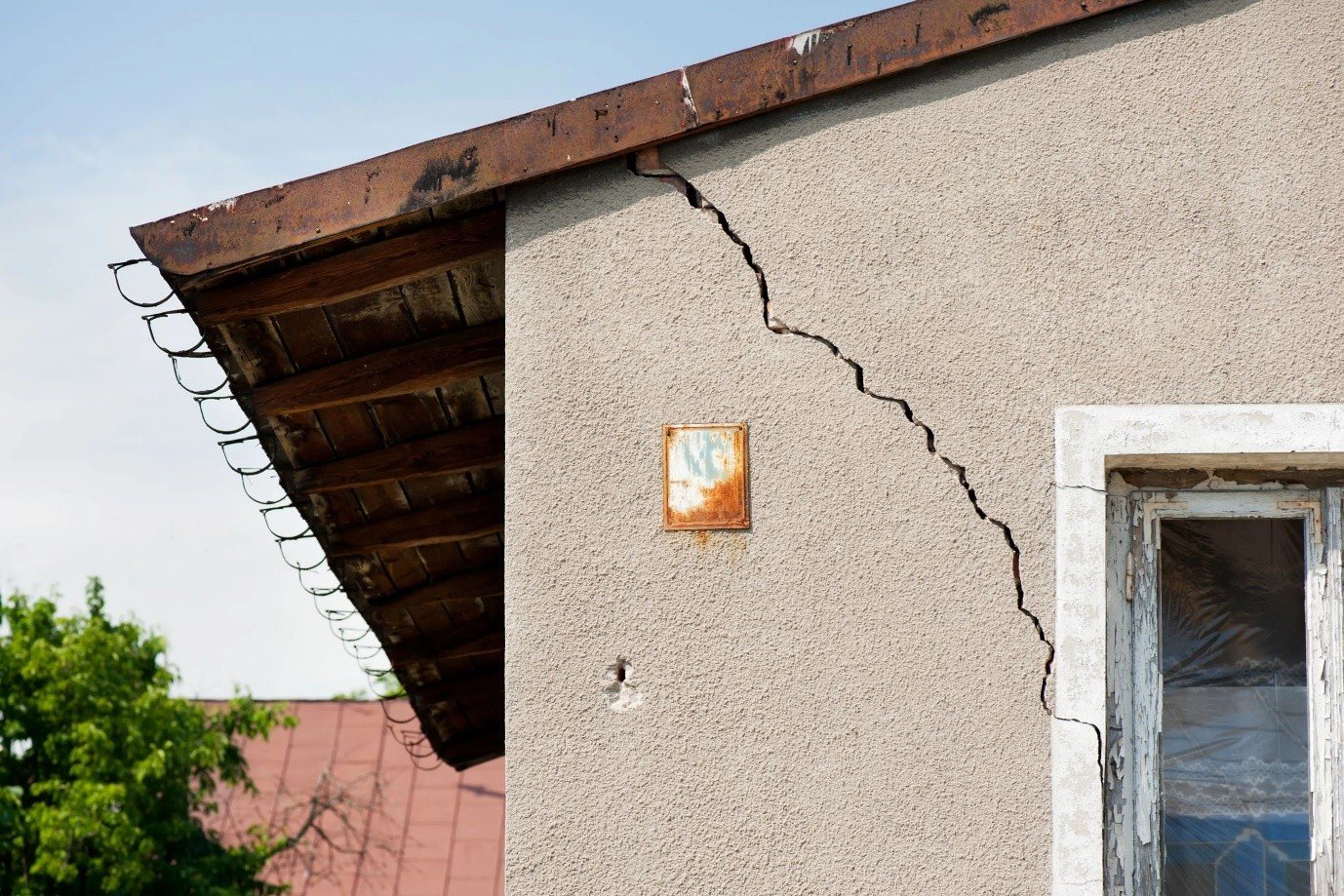
3. Diagonal or Stair-Step Cracks
These cracks are in form of a zig-zag or diagonal shape.
- Ordinary near doors and windows.
- Commonly proceed brick or block joints.
- Indicate movement of foundation usually.
They might refer to the structural issues.
4. Hairline Cracks
Cracks on the hairline are thin and shallow.
- Usually less than 1 mm wide
- Common in plaster and paint
- Mostly harmless
They impact primarily on looks, but not on safety.
Cracks in Drywall Joints
- What Are Drywall Joints?
- Drywall joints are the crossing places of two sheets of drywall.
- Found on walls and ceilings
- Taped with joint compound and tape.
Such are typical areas of weakness.
2. Why Drywall Joints Develop Cracks
There are cracks in the joints of drywalls that occur because of:
- Poor joint finishing
- Movement of the building
- Variation in temperature and humidity
These cracks occur in new houses.
3. Intensity of Drywall Joint Cracks
- Usually non-structural
- Mostly cosmetic in nature
- Well, there is a need to do repair in case cracks continue to reoccur.
Simple repairs can be sufficient.
Are Cracks in Walls and Buildings Dangerous?
Generally Non-harmful Cracks
There are other cracks that present no threat.
- Small hairline cracks
- Cracks that are not expanding with time.
- Cracks in plaster only
These cracks can be repaired.
Red Flags That Should Not Be Ignored
Other cracks are severe and cannot be overlooked.
- Cracks, which continue to widen.
- Reappearing cracks after repair.
- Cracks in slabs, columns or beams.
They might signify structural issues.
How to Prevent Cracks in Building
It is always difficult to repair what has been destroyed.
- Proper Foundation and Architecture
A safe building is anchored on a solid foundation.
- Proper soil testing
- Correct foundation design
- Balanced load distribution
Effective planning will minimize cracks in future.
2. Quality Construction Practices
It is important to have good materials and good work.
- Take quality cement, steel and bricks.
- Adhere to the appropriate construction practice.
- Pay attention to detailing
This guarantees durability of buildings. HiDPL, a construction company in jaipur, provides excellent construction services and follows proper construction practices to help reduce crack-related issues in buildings.
3. Curing and Control of Moisture
Post-construction is very significant in curing.
- Keeps concrete strong
- Reduces shrinkage cracks
- Improves durability
Waterproofing also prevents the damage of walls caused by moisture.
4. Regular Inspection and Maintenance
The small cracks are to be checked at an early stage.
- Crack is prevented by early repair.
- Regular checks save money
- Improves building life
Maintenance maintains buildings in condition.
Building Cracks Repair – Common Methods

- Minor Crack Repair
Minor cracks are easy to fix.
- Putty or sealant filling of the crack.
- Smoothing and re-painting on the surface.
- Mainly cosmetic repairs
These are the repairs that enhance appearance.
2. Structural Crack Repair
The structural cracks require special treatment.
- Making the techniques sturdier such as grouting or stitching.
- Steel or chemical solution used.
- Has to be carried out by specialists.
There should be the involvement of experts.
3. Weaknesses of Surface-Level Repairs
Surface repairs have limits.
- May not fix the root cause
- Cracks may come back
- Temporary solution only
This is significant in proper diagnosis.
Conclusion
Cracks in walls and buildings are usual but they must not be overlooked. The knowledge of the kind of cracks that occurs in the building structures is important to determine whether a crack is harmless or dangerous.
Small cracks can be prevented by taking steps early enough before they turn into big issues. Safety in building constructions is based on proper construction, regular maintenance and proper repair techniques.
Professional evaluation is the option when cracks are the matter of safety. When done appropriately, cracks repair in buildings can safeguard the building and the occupants.
Have a project in mind?
Talk to our structural engineers about design, PEB or turnkey construction.