In this article
- What Makes One Type of Concrete Different from Another?
- What Are the Main Types of Concrete Used in Construction?
- PCC vs RCC vs RMC vs Precast Concrete: What Is the Difference?
- Is a Type of Concrete the Same as a Concrete Grade?
- How to Choose the Right Type of Concrete?
- Common Mistakes When Comparing Concrete Types
- Conclusion
- Frequently Asked Questions
A foundation, a floor slab, a pavement and a precast wall can involve the use of concrete. But would they call for the same kind of concrete? It could make a difference to how the structures carry loads, respond to a site's conditions and perform over time.
That means which types of concrete used in construction should be considered before things like materials are ordered and work is started. PCC, RCC, ready-mix concrete (RMC), precast concrete and fibre-reinforced concrete are some examples, each of which is suitable for different reasons.
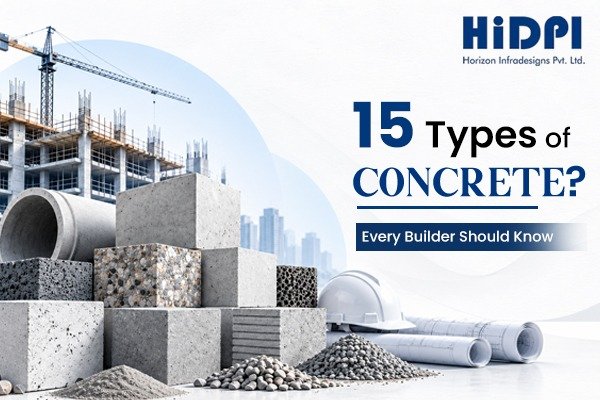
The right choice depends on the structures, ground conditions, exposure, required performance and engineering specifications. To help you choose suitable concrete for your project, we’ll discuss 15 common types of concrete and factors that you should consider before making a choice.
What Makes One Type of Concrete Different from Another?
The main difference between types of concrete lies in what they are designed to achieve and how they are made, reinforced or placed. As explained in our article on what concrete is and how it is used, its basic ingredients are cement, aggregates and water. Changes in the mix, reinforcement and method of production create the different forms of concrete.
Concrete can be classified by reinforcement, strength, production method, placement method or intended performance. For example, an RCC slab may use ready-mix concrete, combining structural reinforcement with concrete produced at a batching plant and delivered to the site.
What Are the Main Types of Concrete Used in Construction?
Concrete is not selected on strength alone. The right type depends on how the material will be used, the loads it needs to handle, the site conditions and the way it will be produced and placed. The following 15 types of concrete and their uses cover common construction applications as well as specialised requirements.
1. Plain Cement Concrete (PCC)
Plain Cement Concrete (PCC) contains concrete without structural steel reinforcement. It is commonly used for levelling layers below foundations, pavement bases and other specified non-reinforced applications. Its main benefit is providing a stable, even surface for subsequent work. However, PCC should not be used where structural reinforcement is required by the design.
2. Reinforced Cement Concrete (RCC)
Reinforced Cement Concrete (RCC) is a mixture of cement concrete and steel reinforcements used for foundations, beams, columns and slabs. The concrete mixture resists compression, while steel reinforcements take up tension. Thus, the detailing of reinforcements is extremely important.
The grade of concrete and the placement of reinforcements in beams, columns, and slabs are decided as per the RCC structure design in the project. In addition, it has to be placed as per the approved drawings.
3. Prestressed Concrete
Prestressed concrete uses engineered tensioning of tendons to introduce forces into concrete members before or during service. It is used in bridges and selected long-span structural elements where efficient load carrying is required. Its main benefit is helping members span longer distances with controlled deflection. Because prestressing is specialised, tendon placement and tensioning require careful engineering.
4. Ready-Mix Concrete (RMC)
Ready-mix concrete (RMC) is produced in a batching plant and then delivered to the construction site for placement. It is suitable for projects that need consistent materials to be produced in controlled conditions and where large volumes of concrete are needed.
However, the transportation, site access, pumping arrangements and workforce should be considered in order to avoid delays in placement of concrete.
5. Precast Concrete
Precast concrete is cast and cured as an element before being transported to its final location. It is used for panels, stairs, beams, drainage components and other construction elements. Controlled production can support consistent quality and reduce some site activities. The main consideration is coordination between fabrication, transport, lifting and installation, including dimensions and connection details.
6. Normal-Strength Concrete
Normal-strength concrete is designed to produce a specified compressive strength. It can be used for general construction work if its properties match the requirements of structural and non-specialised works. Its main benefit is versatility for routine construction. However, the structural element, loading conditions, exposure and specified grade must still be considered before selecting it.
7. High-Strength Concrete
High-strength concrete is specially blended to provide higher compressive strength and can be used in heavily loaded structural members and selected infrastructure projects. It can be used when greater strength is required or desired to fulfil a project’s needs, and the reduced cross-section of some members might be beneficial.
On the other hand, it does not automatically mean that high-strength concrete should be used if the strength is higher than required. The workability, durability, placement and curing properties should also be taken into account.
8. High-Performance Concrete
High-performance concrete is a type of concrete which is capable of delivering specific properties, such as durability, workability, strength or resistance to highly aggressive environments. It is applied in special structural and infrastructural works, where particular properties should be achieved.
The major advantage of such concrete is that its composition may be specially adjusted in order to improve performance. However, high performance does not necessarily mean high strength. Therefore, the required characteristics should be defined in each particular case.
9. Self-Compacting Concrete
Self-compacting concrete is a type of concrete that needs no mechanical vibrations during the process of placement in order to achieve good quality. The construction material can flow to complex shapes and structures with congested reinforcements. It is mainly used in areas where compaction is not possible due to restricted access.
The main advantage of using it is that it is easy to place in difficult locations. However, it requires extremely careful dosing of the constituents to avoid segregation and improper filling.
10. Fibre-Reinforced Concrete
Fibre-reinforced concrete contains specified fibres that can improve crack control, toughness and resistance to certain impacts or abrasion. It is used in selected floors, pavements and specialised applications. Its main benefit is the additional performance provided by fibres distributed through the concrete. However, fibres do not automatically replace designed steel reinforcement, which remains subject to structural requirements.
11. Lightweight Concrete
Lightweight concrete differs from conventional concrete in terms of density and, as a result, weight. Denser concrete is stronger but heavier. Thus, lighter concrete can be used to make selected building elements and panels to reduce the overall load.
The primary benefit of using it in construction is decreasing the weight of particular elements while maintaining their purpose. However, lower density can affect strength and other properties. Because of that, the mix must meet project requirements.
12. Pervious Concrete
Pervious concrete is formed of connected voids which allow water to flow through the structure. The material is used for constructing appropriate drainage structures, which are designed to prevent water accumulation on the surface. The major advantage of using pervious concrete is that it enables water infiltration, which occurs below the ground surface.
However, its open structure gives it different strength and durability characteristics, so the mix, supporting layers and drainage conditions need assessment.
13. Shotcrete
Shotcrete is concrete or mortar applied to a surface by spraying. It is used for repairs, slope protection and specialised construction where conventional placement may be difficult. Its main benefit is efficient application on vertical, overhead or irregular surfaces, often with less traditional formwork. However, surface preparation, mix control, spraying technique and curing strongly affect the finished result.
14. Roller-Compacted Concrete
Roller-compacted concrete is a stiff concrete mixture placed in layers and compacted using rollers. It is used for selected pavements as well as large-scale works where broad-area mechanical placement is suitable. Its main benefit is efficient placement and compaction across large surfaces. However, layer thickness, moisture content, compaction and construction sequencing require close control to achieve the specified performance.
15. Low-Carbon Concrete Mixes
Low-carbon concrete mixes are developed to reduce embodied carbon while meeting specified performance and durability requirements. They may be used where reducing construction-related environmental impact is part of the project requirements. Their main benefit is the potential to lower concrete-related emissions. However, “green concrete” is a broad description, so the actual mix, materials and test results should be checked.
PCC vs RCC vs RMC vs Precast Concrete: What Is the Difference?
PCC, RCC, RMC and precast concrete are often discussed together, but they describe different aspects of concrete. PCC and RCC relate to reinforcement, RMC describes production and supply, while precast describes where and how the concrete element is cast.
The following table presents a quick comparison between PCC vs RCC vs RMC vs Precast Concrete:
|
Term |
What it describes |
Common use |
Key consideration |
|
PCC |
Concrete without structural steel reinforcement |
Levelling layers, pavement bases |
Used where structural reinforcement is not required |
|
RCC |
Concrete with steel reinforcement |
Foundations, beams, columns, slabs |
Reinforcement must follow structural design |
|
RMC |
Concrete batched at a plant and supplied to site |
Large structural and construction works |
Delivery and placement need coordination |
|
Precast |
Concrete element cast and cured before installation |
Panels, stairs, beams, drainage elements |
Transport and installation must be planned |
These categories can be combined in one project. For example, an RCC slab cast on site may use RMC, while an RCC beam may be precast. Therefore, identifying the term alone is not enough. The structural requirement, production method and installation process all need to be considered when selecting concrete.
Is a Type of Concrete the Same as a Concrete Grade?
No. A concrete type describes characteristics such as reinforcement, production method, placement or intended performance, while a concrete grade specifies the required compressive strength. The two can therefore apply to the same concrete without describing the same thing.
What do M20, M25 and M30 Mean?
Under standard classifications for concrete grades in India, designations like M20, M25 and M30 indicate specified compressive strength. The number determines the characteristic compressive strength of the concrete, which is measured in MPa under the relevant testing conditions.
Concrete with a higher grade indicates better specified strength, but it does not mean the specific type of concrete is suitable for every application. The structural design and project specifications are evaluated to choose an appropriate grade for a particular beam, foundation, column, slab or other structural element.
How to Choose the Right Type of Concrete?
To choose the right form of concrete, you should match the concrete’s properties and applications to the structural requirements, construction method, site conditions, exposure as well as required quality. Here is how you can assess each factor:
Consider the Structural Application
The first step in assessing suitable concrete is to identify where it will be used. Concrete is used in many areas of the structure, such as foundations, columns, slabs, pavements, floors of industrial buildings, and precast concrete products. For each of these elements, different properties are needed due to the varying loads, dimensions and purposes. The structural design should determine the properties required for each element.
Check Soil and Site Conditions
Ground conditions are specifically important for foundation work because soil characteristics influence how structural loads are transferred to the ground. For foundation work, soil testing services can help you to establish the ground conditions that engineers consider alongside the structural loads and foundation design.
Consider Exposure and Long-Term Durability
Moisture, aggressive ground conditions and weather exposure can affect concrete performance over time. The expected service life should therefore be considered alongside strength. A higher-strength concrete is not automatically suitable if its durability characteristics do not match the surrounding conditions.
Plan Supply, Placement and Curing
The construction process also affects concrete selection. Project volume, site access, delivery schedules, pumping requirements and reinforcement congestion should be considered before placement. Curing arrangements also need to be planned so the concrete can develop the specified properties under suitable site conditions.
Confirm Testing and Quality Control
The selected concrete should be supported by an approved mix, appropriate material checks, sampling, testing and proper site records. Before work begins, discuss these questions with the engineer or contractor:
- What properties does the structural design require?
- Which grade is specified for each element?
- What exposure or durability requirements apply?
- How will delivery, placement and curing be managed?
- What testing and records will confirm the required quality?
Common Mistakes When Comparing Concrete Types
Comparing the types of concrete without considering their purpose can result in errors and complications during the construction process. Below are some common mistakes that you should avoid while comparing concrete types for your project:
- Considering ready-mix concrete as a grade of strength.
- Assuming that PCC and RCC can be used interchangeably.
- Making decisions based on initial costs.
- Adding extra water at the site without following the approved mix guidelines.
- Assuming that the addition of fibres can replace the need for reinforcement.
- Ignoring the placement and curing after choosing a suitable mix.
Conclusion
Choosing the right concrete is just one part of creating a structure that performs well over time. The outcome also depends on proper design, reliable material testing and careful execution at the site. When these stages are planned together, you can approach your construction project with better clarity. HiDPL follows this integrated approach across residential, commercial and industrial projects. If you are planning a project and need a construction company in Jaipur, HiDPL’s team can help you plan the construction requirements from the outset.
Frequently Asked Questions
1. How many types of concrete are used in construction?
Quite a few. The common ones are PCC, RCC, RMC, precast, high-strength, lightweight and specialised concrete, and there are more beyond those.
2. What is the difference between PCC and RCC?
PCC is plain concrete with no steel inside. RCC has steel reinforcement built in, which is what lets it carry structural loads in beams, columns and slabs.
3. Is ready-mix concrete a type or a grade?
Ready-mix concrete defines the production and supply of the material, not the concrete’s strength grade.
4. Can precast concrete also be reinforced?
Yes. Precast elements can include steel reinforcement when required by their structural design.
5. Which type of concrete is used for foundations?
It depends on the job. The design loads, soil conditions, exposure and project specifications all decide what goes into the foundation.
6. Who decides the concrete grade for a building?
The structural engineer. They choose the concrete grade based on the structural design and the project specifications.
Have a project in mind?
Talk to our structural engineers about design, PEB or turnkey construction.