In this article
Everybody knows concrete. You see it in buildings, roads, bridges and plenty of other places. But have you wondered what is concrete beyond the usual definition of cement, water, sand and coarse aggregates such as gravel or crushed stone? The cement mix holds everything together as the mixture hardens. What happens during mixing, placement and curing also matters.
From foundations and columns to industrial structures, concrete is used in almost all kinds of construction work. This blog takes you through what concrete is made of, how it is produced, its main properties, common uses and the advantages and limitations that come with it.
What Is Concrete?
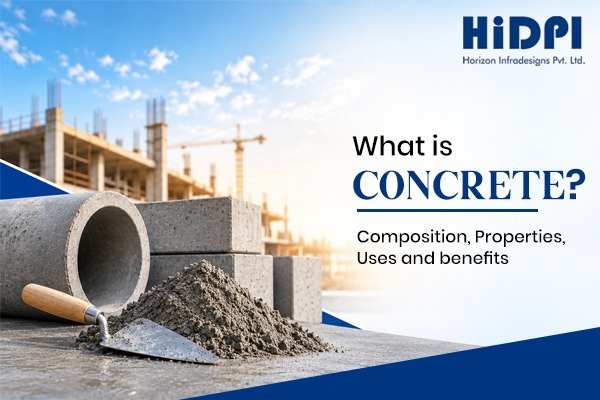
Concrete is a composite material used in construction, formed when cement, water, fine aggregate and coarse aggregate are mixed and then allowed to harden. The materials do not simply stay together as separate components. Cement and water form a paste that coats and binds the aggregates, while the resulting mixture changes from a workable mass into a solid material.
In its fresh state, concrete can be mixed, transported, placed and compacted into the required form. Once it hardens, its behaviour is different. The hardened material can carry structural loads and withstand exposure, which depends on its mix and the way it has been placed and cured.
A few things explain why concrete is used everywhere-
- The composition of concrete can be adjusted according to the required application and performance.
- Fresh concrete can be shaped before it hardens, making it useful for many structural forms.
- Hardened concrete provides compressive strength, which is why it appears in foundations, columns, slabs, roads and other structures.
- It works with steel reinforcement so that reinforced concrete members can handle different types of structural actions.
What Is Concrete Made Of?
So, what is concrete made of? At its simplest, concrete brings together cement, water, sand and coarse aggregate. Each of these materials has a different purpose, and the proportion between them affects how the finished concrete will perform.
Cement
Cement is what brings the other materials together. Add water to it, and a paste forms, which gradually binds the aggregate as the concrete hardens.
Water
Without water, the hydration process cannot begin. The amount used also changes how the fresh mix works, including how easily it can be mixed and handled.
Fine Aggregate
Sand fills the smaller gaps between the larger particles. This leaves the mix more compact once the materials come together.
Coarse Aggregate
Gravel or crushed stone makes up a large part of the concrete volume. It also contributes to the strength of the concrete after it has hardened.
Admixtures
Depending on the requirements, admixtures may be added to alter workability, setting time, strength or durability.
|
Ingredient |
Main function |
|
Cement |
Binds the materials. |
|
Water |
Initiates hydration. |
|
Sand |
Fills smaller voids. |
|
Coarse aggregate |
Provides bulk and strength. |
|
Admixtures |
Modify performance. |
The quality of these ingredients can be assessed through professional building material testing services.
How Is Concrete Made?
Concrete does not become a finished construction material in one go. Several stages come before that, and a problem at any point can affect the final result.
Material Selection
The answer to how concrete is made starts with choosing the cement, water, fine aggregate, coarse aggregate and any admixtures needed for the intended application.
Mix Proportioning
Before the materials are mixed, their quantities have to be decided. The amount of cement, water and aggregates depends on what the concrete is meant to do. If those proportions are not ideal, the finished concrete may not perform as you expect it to.
Batching and Mixing
The selected materials are measured and then mixed together. Besides, they need to be distributed properly through the mix in a consistent manner. Water also needs to be controlled, since adding too much can affect the concrete.
Transportation and Placement
Once mixed, the concrete has to reach the place where it will be used while it is still workable. It is placed into the prepared formwork and spread into the required area. Delays during this stage can make placement more difficult.
Compaction
After the concrete is placed, it is compacted to get rid of air trapped inside the mix. This helps the concrete fill the form properly. If compaction is poor, voids can remain. This, in turn, might affect the quality of the hardened concrete.
Finishing and Curing
The surface is finished as required, followed by curing. This stage should not be rushed, since insufficient curing can affect the development and final performance of concrete.
Concrete proportions and structural requirements are determined as part of professional RCC structure design services.
What Are the Important Properties of Concrete?
The way concrete behaves depends on several things, not just its strength. Some properties matter while the mix is fresh; others become clear after it has hardened. The materials, mix, workmanship and curing together play a role.
- Workability tells us how easily fresh concrete can be handled and placed.
- Concrete is built to handle compressive loads, and this capacity is referred to as its compressive strength.
- Exposure over the years can affect how well concrete continues to perform. That ability to withstand such conditions is its durability.
- The materials used in a mix, along with the quantities of each, have a bearing on its density.
- Some hardened concrete lets fluids pass through more easily than others. This characteristic is known as permeability.
- High temperatures can change the way concrete works, which is where its fire resistance becomes relevant.
- Moisture loss can cause the concrete to change in volume. The resulting shrinkage can sometimes cause cracks.
|
Property |
Importance |
|
Workability |
Supports placement and compaction. |
|
Strength |
Helps resist structural loads. |
|
Durability |
Supports long-term performance. |
|
Permeability |
Influences water penetration. |
|
Shrinkage |
Can influence cracking. |
What Are the Main Uses of Concrete?
Concrete is found in all kinds of construction work, be it a structural element or something simpler like non-structural applications. What it is used for is decided on the project itself, along with its design, expected loads, site conditions and specific requirements.
- Foundations and footings form the base of many structures and transfer loads to the ground. Concrete is also used in the raft foundation construction process where the design and site conditions call for this foundation system.
- Columns, beams and slabs commonly use concrete as part of structural frames in buildings.
- Residential and commercial buildings make extensive use of concrete in structural elements, floors and other construction work.
- Roads and pavements rely on concrete where a rigid pavement surface is required.
- Bridges and flyovers use concrete in various structural components, depending on the engineering design.
- Dams and water-retaining structures also use concrete for large-scale infrastructure applications.
Industrial floors and machine foundations require carefully planned concrete work suited to their particular loads and operating conditions. This is where construction services for industrial and commercial projects can form part of the wider project requirements. Also, precast pipes, panels, blocks and kerbs are produced from concrete for different construction and infrastructure applications.
What Are the Advantages of Concrete?
The advantages of concrete come from the way it combines strength, durability and flexibility in one construction material. It can be used for a simple floor as well as major structural work, depending on the design.
A few of its commonly valued characteristics are mentioned below:
- High compressive strength and good durability.
- Resistance to fire under suitable conditions.
- Flexibility in shape and form during placement.
- Compatibility with steel reinforcement.
- Use in both structural and non-structural work.
Concrete is not without drawbacks, though. It has relatively low tensile strength without reinforcement, and its own weight can add considerable load to a structure. Cracking can occur as well, and poor curing or weak quality control can affect the finished result.
Cement vs Concrete: What Is the Difference?
In the debate of cement vs concrete, it can be confusing because the two terms are often used interchangeably. Cement is an ingredient used to make concrete; it is not the finished construction material itself.
|
Cement |
Concrete |
|
A binding material. |
A composite construction material. |
|
An ingredient of concrete. |
Made using cement, water and aggregates. |
|
Usually supplied as a powder. |
Initially placed as a workable mixture. |
|
Used in concrete and mortar. |
Used in buildings and infrastructure. |
Main Types of Concrete
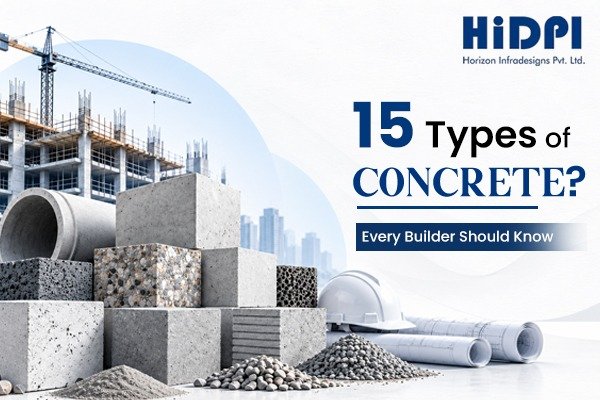
Concrete is available in several forms. These are decided based on the materials, production method and intended application. Listed here are the most common types:
- Plain concrete.
- Reinforced concrete.
- Prestressed concrete.
- Ready-mix concrete.
- Precast concrete.
- Lightweight concrete.
- High-strength concrete.
- Self-compacting concrete.
Each concrete type mentioned above has different properties and applications. It is wise to learn more about the different types of concrete and their uses so they can be utilised smartly.
Frequently Asked Questions
What is concrete in simple words?
Think of concrete as a mix of cement, water, sand and coarse aggregates. After it is placed and cured, the mixture hardens into a solid material that we often find being used during construction.
What are the four main ingredients of concrete?
You have cement, water, fine aggregate such as sand, and coarse aggregate such as gravel or crushed stone. These four constitute the basic concrete mix.
Is concrete the same as cement?
No. Cement is the binding material used in concrete. After water and aggregates are added and the mix hardens, it is called concrete.
What is concrete mainly used for?
You will find concrete in foundations, beams, columns, slabs, roads and bridges, among many other applications.
Conclusion
Concrete may look like a simple mix of a few materials, but its performance depends on what goes into it and what happens afterwards. Cement, water and aggregates set the foundation of the mix; proportioning, placement, compaction and curing shape the result. Its strength and versatility make it evident why it is used across buildings, roads and infrastructure, although cracking, weight and low tensile strength still act as limitations. Good concrete, ultimately, comes down to quality materials and proper design, alongside careful execution.
Have a project in mind?
Talk to our structural engineers about design, PEB or turnkey construction.