In this article
- What Is Structural Design in Construction?
- Why Structural Design Determines the Lifespan of a Building
- Key Elements of Structural Design That Ensure Long-Term Strength
- Structural Planning and Load Analysis
- Soil Conditions and Design Foundation
- Selection of Material and Structural Systems
- Structural Redundancy and Safety Margins
- Role of Structural Design in Different Types of Buildings
- Residential Buildings
- Commercial Buildings
- Infrastructure and Industrial Projects
- Conclusion: Strong Structural Design Is the Foundation of Long-Lasting Buildings
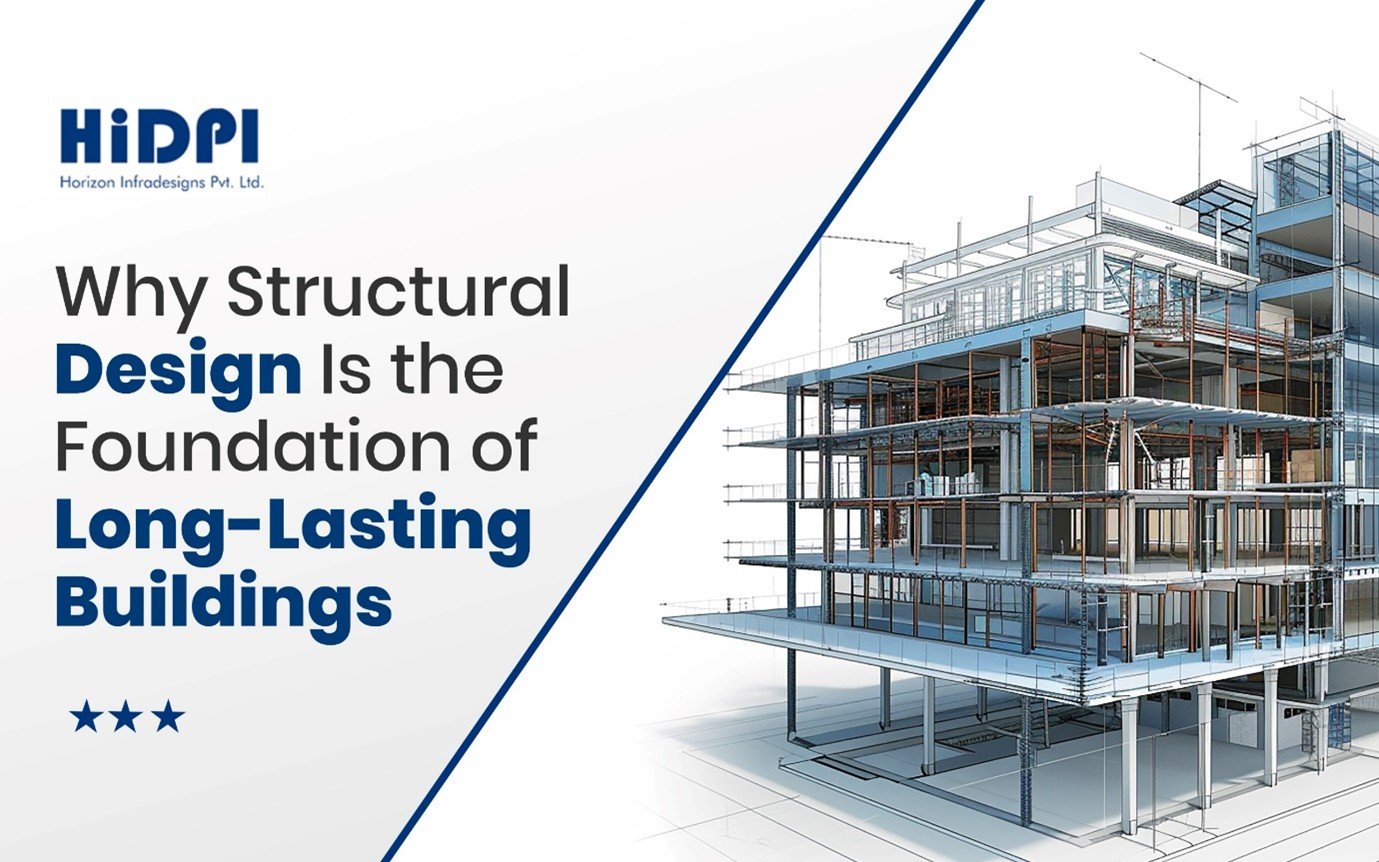
Buildings are not constructed in a short period. They are long-term properties that will be sustainable over decades. People dwell in them, occupy them, and rely on them to have safety. Due to this, the life of a building is significant. Most individuals believe that a good building should be able to last long by simply having good materials with a nice design. But that is not fully true. A structural design is the true strength of a building. Structural design dictates the way a building supports weight, pressure, and sustains itself through time without any damage.
This process greatly involves professional planning. Before the building is constructed, a qualified structural engineering consultant examines the loads, the soil, climate, and the usage. Through their efforts, the structure remains stable, safe, and functional over a number of years. Even the costly buildings fail prematurely without the appropriate structural design.
What Is Structural Design in Construction?
Structural design refers to planning and designing of the principal framework of a building. It dwells on the stability, bearing, and stability of a building under various circumstances.
To put it simply, the structural design determines:
- The strength with which the building has to be.
- How weight is distributed.
- How the building will resist forces such as wind and earthquakes.
Structural design does not mean architectural design. Architectural design is interested in the appearance of the building, the way the rooms are organized, and the use of space. Structural design is concerned with what cannot be easily observed like beams, columns, slabs, and foundations.
The building resembles the skeleton of the structure. The structural elements are just as the bones that support the human body. When it is a weak structure, then the building is not safe, however beautiful it may appear.
Why Structural Design Determines the Lifespan of a Building
Structural design is very important to the lifespan of a building. A good building structure enables a building to sustain over a long period.
Load handling is one of such factors. There are various loads on buildings on a daily basis. These are the weight of the building, people, furniture, vehicles, and equipment. In the long run, cracks and damage may appear in case these loads are mishandled.
The environmental factors also contribute significantly. Buildings are continuously subject to wind pressure, earthquakes, rainfall, changes of temperature, and soil movement. Structural design considers such factors and prepares the building to withstand these factors.
Early fatigue is also avoided through good structural design. Fatigue occurs as materials become weak as a result of continuous stress. When the building is properly designed, unnecessary stress is removed, and the building ages gradually and securely rather than collapsing prematurely.
Key Elements of Structural Design That Ensure Long-Term Strength
Structural Planning and Load Analysis
The analysis of the load is one of the initial and most significant stages of structural design. All possible loads that the building might encounter throughout its life are calculated by the engineers.
These loads include:
- Permanent weights such as the walls, floors, and roofs, referred to dead loads.
- Live loads or people, furniture, and moving objects.
- Reference to future loads like new floors or reduced use.
Proper load analysis helps make sure the building is strong enough without being over-built. By planning for both current and future needs, it reduces the chances of cracks, bending, and structural damage, making the building safer and longer-lasting.
Soil Conditions and Design Foundation
The foundation is the backbone of any building—without it, long-term strength and stability cannot be achieved. The design of foundations is dependent on the soil conditions. HiDPL has its own Soil Testing Lab, equipped to conduct detailed geotechnical investigations required for safe and efficient foundation design.
The soil testing assists the engineers to know:
- Soil strength,
- Water content,
- Load-bearing capacity.
Different soil types require different foundation systems. For example, soft soil may require deep foundations, while hard soil can adequately support shallow foundations. If a foundation is not designed in accordance with soil conditions, the building may experience uneven settlement or develop cracks over time. A properly constructed foundation distributes structural loads evenly and ensures long-term stability for several decades.
Selection of Material and Structural Systems
In order to have long-term strength, it is necessary to choose the right materials. Structural design refers to the use of materials that are in line with the purpose and setting of the building.
Ordinary structural materials are:
- Concrete reinforced with steel (RCC),
- Steel,
- Composite structures.
All materials possess their advantages. RCC is preferred in residential and business buildings because it is durable. Due to high flexibility and strength, steel is a material that is commonly employed in high-rise buildings and industrial buildings. Composite structures are those which use materials together in order to enhance performance.
Selecting materials according to the building’s purpose ensures safety, strength, and cost-effectiveness.
Structural Redundancy and Safety Margins
Safety margins are additional strength that is designed in such a way that they take care of unforeseen stress. The margins ensure that the building withstands extreme weather conditions such as heavy storms or sudden changes in load.
Structural redundancy implies a number of load paths. When one of them fails, another part is able to relieve the load. This minimizes the chances of complete collapse.
The safety margins and redundancy in designing help in making sure that even when the conditions are unconventional, or the buildings may be expanded in the future, the buildings will still be safe.
Role of Structural Design in Different Types of Buildings
Residential Buildings
Housing structures are meant to be occupied by families and day-to-day living. Structural design is concerned with safety, comfort, and permanence.
Key goals include:
- Insurance against natural forces,
- Stable floors and walls,
- Extended life, with few repairs.
Proper structural design also makes houses safe and comfortable for generations to come.
Commercial Buildings
Commercial buildings are loaded with more people. Hotels, malls, and offices require more robust designs which can withstand massive traffic.
Commercial building structural design revolves around:
- High occupancy loads,
- Flexible layouts,
- Adherence to rigid safety regulations.
Good structural planning will assist such buildings to achieve good performance despite frequent use.
Infrastructure and Industrial Projects
Extreme conditions are experienced in industrial buildings and infrastructure projects. Cycles of heavy machines, vibrations, and excessive working hours cause pressure.
Such projects are structurally designed to concentrate on:
- Heavy load resistance,
- Long-term durability,
- Low maintenance needs.
Buildings used in industries can fail long before the anticipated time without effective planning of their structure.
Conclusion: Strong Structural Design Is the Foundation of Long-Lasting Buildings
A long-lasting building relies on strong and well-planned structural design. Structural design determines the weight-carrying, nature resistance, and durability of a building. The initial participation of qualified experts is a guarantee of safety, durability, and peace of mind. Well-planned structure minimizes the cost of repair and saves lives. Good structural design means that buildings are safe, stable, and usable for several decades, and this is why it is one of the most crucial aspects of building construction. By combining technical expertise with practical execution, HiDPL has established itself as a reliable construction company in Jaipur, delivering buildings that prioritize safety, strength, and longevity.
Have a project in mind?
Talk to our structural engineers about design, PEB or turnkey construction.