In this article
- 1. What is BIM (Building Information Modeling)?
- 2. How BIM Works in Construction (Step-by-Step)
- 3. Key Components of BIM
- 4. Benefits of BIM in Construction
- 5. Real-World Applications of BIM
- 6. BIM vs Traditional Construction Methods
- 7. Challenges of Implementing BIM
- 8. Why BIM is Important for Modern Engineering Projects
- 9. How HiDPL Uses BIM for Better Project Execution
The construction industry problems faced by the world have always been a triad of unresolved issues: there is always delay, cost overrun is always high and communication among the parties has always been inadequate. The use of traditional methods is more likely to use fragmented 2d drawings that do not reflect the complexity of contemporary architecture, with the "clash" only being realized after the ground is broken. These inefficiencies translate into billions of dollars in lost revenues and wasted materials with the increasing scale and complexity of projects.
The ultimate contemporary solution to these ancient issues has come in the form of Building Information Modeling (BIM). BIM in construction is a single source of truth because it helps to change the emphasis of the traditional drawings to the dynamic and data-rich environments. This paper discusses what BIM is, the effect of BIM on the project lifecycle, and why it is not a luxury option any longer but a necessity in the future of infrastructure and engineering.
1. What is BIM (Building Information Modeling)?

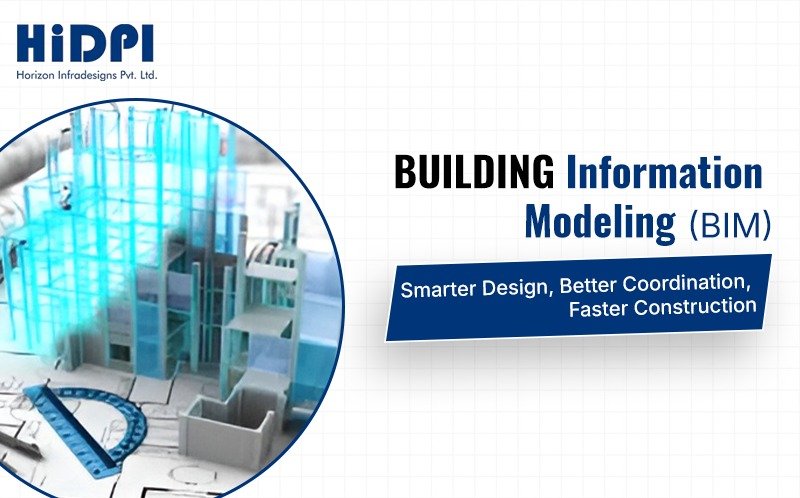
To comprehend the meaning of BIM, one needs to look beyond the software. The BIM full name is Building Information Modeling and this is commonly misconstrued as simply 3D modeling. Although a 3D image is included in the package, the essence of BIM is the Information and the process of Modeling.
Simplified, BIM can be thought of as a digital twin of a building. As you could create a complicated LEGO set with a digital manual that explains to you virtually where each part fits, its weight, and its price, BIM enables professionals to create a project on the computer screen before the first brick is installed.
It is a very collaborative process technically and enables more than one professional to design and run a project through one set of computer models. A BIM model, in contrast to a flat drawing, has intelligent objects. To illustrate, a digital door in a BIM model is not merely a series of lines; it includes information regarding the material it should be made out of, its fire rating, its manufacturer and its price. This data and process integration will make sure that all data that is altered is captured and seen throughout the project in real-time.
2. How BIM Works in Construction (Step-by-Step)
To see how BIM can be applied in construction projects, it is necessary to consider it as a sequence of data in time. It is not a single task but an ongoing cycle which changes with the building.
- Planning & Data Input: It starts with a collection of site data, which is commonly done through laser scanning or drones to develop precise computer models of the existing landscape.
- 3D Modeling: Engineers and architects develop a high fidelity 3D model. All the components, such as structural beams, HVAC ducts, and others, are located in this virtual space.
- Teamwork & Conflict Alert: The magic stage. The program automatically detects clashes, such as when a plumbing pipe is to be installed through a steel support beam. They are stored digitally and save thousands of physical rework.
- Simulation (Time + Cost): The construction schedule (4D) and material costs (5D) are simulated using the model and estimated.
- Execution & Lifecycle: The model directs the field crew during the construction. After completion of the building, the digital model is given to the owner to take care of repairs and maintenance as the building progresses with its life.
3. Key Components of BIM
BIM is divided into so-called dimensions which reflect the extent of data to which the model is bound. The following BIM components and BIM levels determine the complexity of the project management:
- 3D BIM (Design): The three-dimensional picture of the project.
- 4D BIM (Time): This provides time information to the model, which can be used to visualize the construction process step by step.
- 5D BIM (Cost): Incorporates cost data, and displays real-time estimates of the costs as the design progresses.
- 6D BIM (Sustainability): Concerns the energy consumption, LEED monitoring, and environmental influence.
- 7D BIM (Facility Management): The data is offered in operations and maintenance, e.g. equipment manuals, warranty dates of the building owner.
4. Benefits of BIM in Construction
The advantages of BIM go way beyond the design stage. Through embracing building information modeling, stakeholders will realize:
- Fewer Errors and Omissions: The project can be visualized in 3D and automated clash detection will reduce the need to issue costly Change Orders.
- Improved Co-ordination: The same model is being used by all the teams, and therefore the structural engineer is aware of what the electrical engineer is up to.
- Cost Efficiency: 5D BIM material take-offs allow the project to be within budget by avoiding over-ordering and wastage.
- Quickly: The faster delivery is up to 20-30% quicker compared with the conventional approach due to superior planning and reduced errors on the ground.
- Better Visualization: Clients are able to virtually walk through the building before it is even built to make sure that the final product will be as per their expectations.
5. Real-World Applications of BIM
BIM can be applied to different industries because of its versatility:
- Infrastructure: This is applied in the design of intricate roads, bridges and tunnels where underground utility coordination is vital.
- Commercial Projects: These are important in high-rise offices and shopping malls where complex HVAC and fire systems are needed.
- Residential Buildings: Improves the accuracy of prefabricated elements in current apartment complexes.
- Industrial Plants: Helps in designing expert facilities such as oil refinery or power plants where the arrangement of equipment is dictated by stringent safety measures.
6. BIM vs Traditional Construction Methods
The transition to BIM is sometimes likened to the transition to word processors to the use of typewriters. The table below underlines the reasons why BIM vs traditional construction is a common issue of discussion:
|
Aspect |
Traditional Construction |
BIM |
|
Design |
2D Drawings (Flat) |
3D + Data-Rich Models |
|
Errors |
High (Found during construction) |
Low (Resolved during design) |
|
Cost Control |
Approximate/Reactive |
Accurate/Proactive |
|
Collaboration |
Limited/Siloed |
Integrated/Transparent |
|
Efficiency |
Slower due to rework |
Faster via simulation |
|
Lifecycle |
Hard to track maintenance |
Seamless facility management |
7. Challenges of Implementing BIM
Although the benefits are evident, the difficulties of BIM can not be overlooked. The deployment of this technology will need a great cultural and financial change:
- High Initial Cost: The investment in high-end hardware and BIM-ready software license can be high to small companies.
- Training Requirements: It has a steep learning curve. The employees should not only be taught how to use software, but to think as a team in a different manner.
- Opposition to Change: A lot of the old-school professionals are used to 2D workflows, and they might not be easily receptive to new digital-first processes.
- Software Interoperability: This is a technical challenge that makes sure that various software adopted by architects and contractors can communicate with one another.
8. Why BIM is Important for Modern Engineering Projects
In an era of rapid urbanization, the importance of BIM in construction is paramount. Engineering projects today are too intricate, and cannot be handled through spreadsheets and paper blueprints. With BIM, the structural design is precise and this makes it possible to come up with bold architectural designs that are structurally viable. It helps to safeguard the safety of the workforce and the financial well-being of the developer by detecting the risks at an early stage. BIM offers the accuracy needed in large-scale projects, in which a 1 percent error can cost millions of dollars.
9. How HiDPL Uses BIM for Better Project Execution
At HiDPL, we consider that the best engineering solutions are constructed under the premises of data and transparency. Our project implementation approach using structural engineering services and BIM system will guarantee that each customer gets a very optimized, error-free design prior to the commencement of construction. We close the gap between the design intent and the physical reality by combining our structural engineering services with the latest BIM workflows. This technological dedication enables HiDPL to deliver projects as precisely as never before and this will enable your vision to be built to the exact picture as you had envisioned being on time and within your budget.
Have a project in mind?
Talk to our structural engineers about design, PEB or turnkey construction.