In this article
- AAC Blocks vs Red Bricks: Quick Comparison
- Difference Between AAC Blocks and Red Bricks
- Weight
- Strength
- Construction speed
- Thermal performance
- Fire resistance
- Cost
- Which Is Better for Different Types of Projects?
- Pros and Cons
- AAC Blocks
- Red Bricks
- Engineer's Recommendation
- FAQs
- Q. Are AAC blocks stronger than red bricks?
- Q. Which is cheaper?
- Q. Which is better for house construction?
- Q. Do AAC blocks crack?
- Q. Which lasts longer?
- Q. Which is better for RCC buildings?
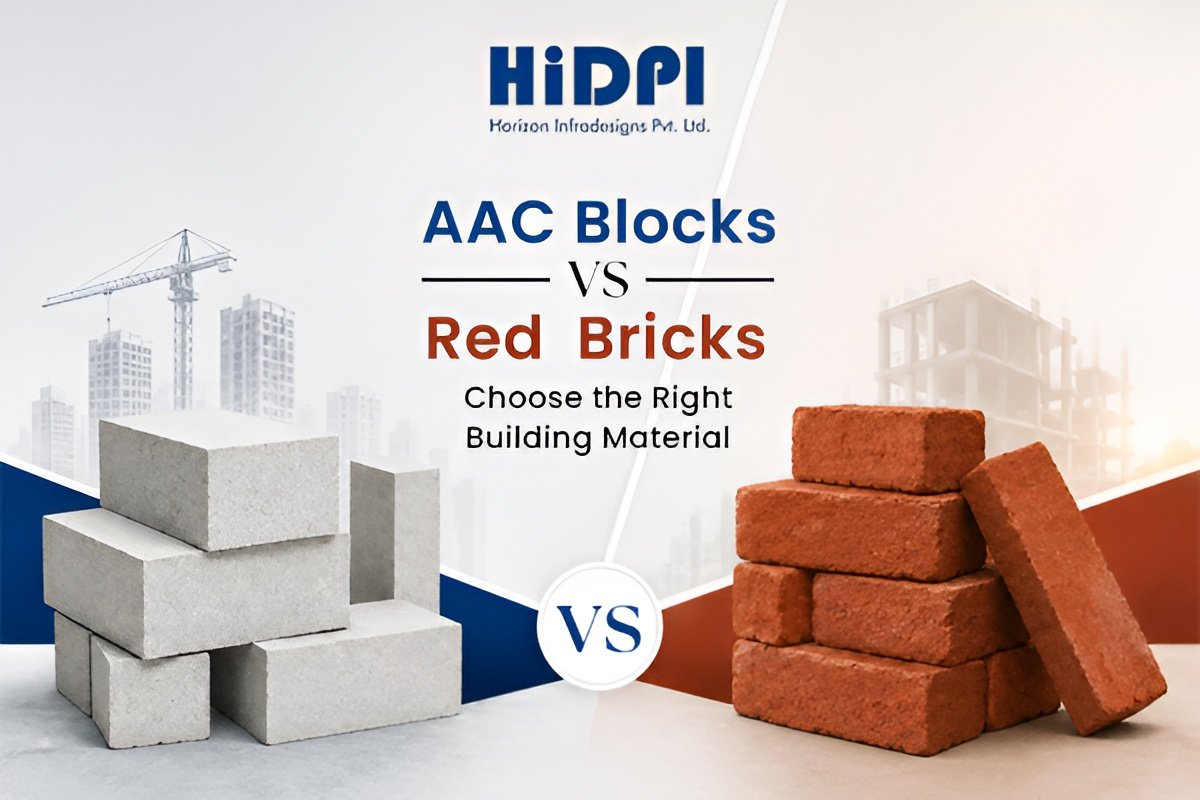
If you walk onto almost any building site in India currently, you'll likely spot two very different piles of masonry stacked nearby: pale, chunky AAC blocks on one side, the familiar reddish clay bricks on the other. Site engineers get asked constantly which one to pick, and the honest answer rarely satisfies people looking for a quick verdict: it depends.
There isn't a single correct choice here, whatever the brochures might claim. Red bricks have carried Indian construction for well over a century, particularly in load-bearing walls where raw compressive strength counts for everything. AAC blocks, on the other hand, have become the default for RCC-framed buildings, largely because they go up faster and insulate far better than fired clay ever could.
Since wall material is genuinely just one variable in a much bigger structural equation, it's worth looping in engineering consultancy services early on, well before pouring the foundation or finalising drawings, rather than treating it as an afterthought once walls are already being priced.
AAC Blocks vs Red Bricks: Quick Comparison
The table below is useful for a snapshot comparison, but numbers on a page rarely settle real arguments on-site. Contractors will tell you that a material perfect for a warehouse can be entirely wrong for a heritage-style bungalow with thick load-bearing walls. So it's worth digging a little deeper into what actually separates these two materials before making a call.
|
Parameter |
AAC Blocks |
Red Bricks |
|
Weight |
Lightweight |
Heavy |
|
Strength |
Moderate, adequate for framed structures |
High, suited to load-bearing walls |
|
Size |
Large, uniform |
Small, variable |
|
Thermal insulation |
Excellent |
Poor to moderate |
|
Fire resistance |
Very good |
Good |
|
Construction speed |
Fast |
Slower |
|
Cost |
Higher material cost, lower labour cost |
Lower material cost, higher labour cost |
|
Environmental impact |
Lower carbon footprint |
Higher, due to the firing process |
|
Best use |
RCC-framed buildings, high-rises |
Load-bearing walls, traditional construction |
Difference Between AAC Blocks and Red Bricks
Here are the primary aspects that separate the two:
-
Weight
AAC blocks are remarkably light for their size, thanks to the aerated, bubble-filled structure created during manufacturing. This cuts down the dead load transferred to the foundation, which can genuinely lower overall structural costs on taller buildings. That said, wall selection is only one part of structural planning; proper soil testing still needs to happen first, since no amount of smart wall material choice compensates for a foundation designed on guesswork.
-
Strength
Red bricks generally win on raw compressive strength, which explains why they've remained the default for load-bearing walls for so long. AAC blocks are strong enough for framed structures where columns and beams carry the actual load, but engineers rarely recommend them where the wall itself needs to bear significant weight.
-
Construction speed
AAC blocks are considerably larger than a standard brick, and far more uniform in shape, so masons lay them quicker with noticeably less mortar wasted in the joints. Red bricks, being smaller and slightly irregular by comparison, mean more units, more joints, and simply more hours spent to finish the same wall area.
-
Thermal performance
The air pockets trapped inside AAC blocks give them genuinely useful insulating properties, keeping rooms cooler through brutal summers and warmer during winter without much extra effort. Red bricks conduct heat far more readily, which is why buildings built with them often need thicker plaster or added insulation just to reach similar comfort levels.
-
Fire resistance
Both materials cope reasonably well with fire, though AAC blocks edge ahead slightly because of their non-combustible, air-entrained composition. For buildings where fire codes are unusually strict, hospitals, for instance, or dense commercial complexes, that difference can actually matter during approvals.
-
Cost
Red bricks are cheaper to buy per unit, no argument there. But once you add up labour hours, mortar consumption and plastering time, AAC blocks frequently even out the ledger, and on some projects even come out ahead once the faster build timeline is priced in.
Which Is Better for Different Types of Projects?
Every project has its own priorities; sometimes it's speed, sometimes structural load, sometimes simply what's locally available and affordable. The table below is a reasonable starting point, though it's never a substitute for an actual site assessment.
|
Project |
Recommended Material |
|
House |
AAC (generally for RCC-framed homes) |
|
Villa |
Either, depending on design and local factors |
|
Warehouse |
AAC |
|
Commercial Building |
AAC |
|
Load-Bearing Structure |
Red Brick (or engineered masonry, depending on design) |
|
High-Rise |
AAC |
A villa built with a traditional load-bearing design might still do better with red brick despite the modern preference for AAC. A warehouse chasing speed and thermal comfort will nearly always lean AAC. Regional supply chains matter too; plenty of small towns simply don't have skilled AAC masons nearby, which quietly tips the decision back towards brick regardless of what's technically "better."
Pros and Cons
Every material trades something for something else, and it helps to see both sides laid out plainly rather than buried in marketing copy.
AAC Blocks
|
Advantages |
Limitations |
|
Lightweight, reduces structural load |
Higher upfront material cost |
|
Excellent thermal insulation |
Needs careful handling, chips easily |
|
Faster construction |
Not ideal for pure load-bearing walls |
|
Good fire resistance |
Limited availability in some regions |
Red Bricks
Red bricks carry their own baggage too, shaped by decades of familiarity rather than any single technical advantage.
|
Advantages |
Limitations |
|
High compressive strength |
Heavier, adds load to the foundation |
|
Widely available almost everywhere |
Slower to construct, more joints needed |
|
Lower material cost |
Weaker thermal insulation |
|
Long, proven track record |
Higher labour and mortar costs |
Engineer's Recommendation
Ask structural engineers which material is genuinely "better," and you'll probably get ten different, carefully hedged answers, and that's not indecision, it's just how the job actually works. Rather than picking a winner outright, engineers weigh several factors together before advising a client.
- The structural system comes first: framed buildings suit AAC comfortably, while load-bearing designs usually still lean towards brick.
- Budget and timeline follow close behind, since AAC's speed advantage can offset its higher sticker price on projects racing against a deadline.
- Climate deserves real weight in the decision too, especially in regions battling extreme summer heat, where AAC's insulation quietly reduces cooling bills for years afterwards.
- Building height, local labour availability and how easily either material can actually reach the site all shape the final call; not every location has trained AAC masons or a reliable supply chain.
This layered, situation-specific thinking is exactly why blanket manufacturer advice tends to fall flat, and why an actual structural consultation is worth far more than a generic sales pitch dressed up as engineering guidance.
FAQs
Q. Are AAC blocks stronger than red bricks?
Not quite. Red bricks typically offer higher compressive strength, making them better suited to load-bearing walls, whereas AAC blocks provide adequate strength for framed structures alongside lighter weight and better insulation.
Q. Which is cheaper?
Red bricks cost less per unit, but AAC blocks often cut down labour, mortar and plastering expenses. Depending on the scale of the project, total costs can end up fairly close, sometimes even favouring AAC once time savings are factored in.
Q. Which is better for house construction?
For most modern RCC-framed homes, AAC blocks tend to be preferred thanks to faster construction, better insulation and reduced load on the structure. Traditional load-bearing homes, though, may still suit red brick better.
Q. Do AAC blocks crack?
They can, particularly if handled roughly or installed without proper technique around door and window openings. Skilled masonry work and correct reinforcement largely prevent this from becoming a real issue.
Q. Which lasts longer?
Both materials, when installed properly, offer genuinely long service lives. Red bricks have a longer historical track record simply because they've been around longer, though well-manufactured AAC blocks are proving just as durable in newer buildings.
Q. Which is better for RCC buildings?
AAC blocks are generally favoured for RCC-framed structures since they reduce dead load, improve thermal comfort and speed up construction, all while fitting naturally within a framed structural system.
Have a project in mind?
Talk to our structural engineers about design, PEB or turnkey construction.